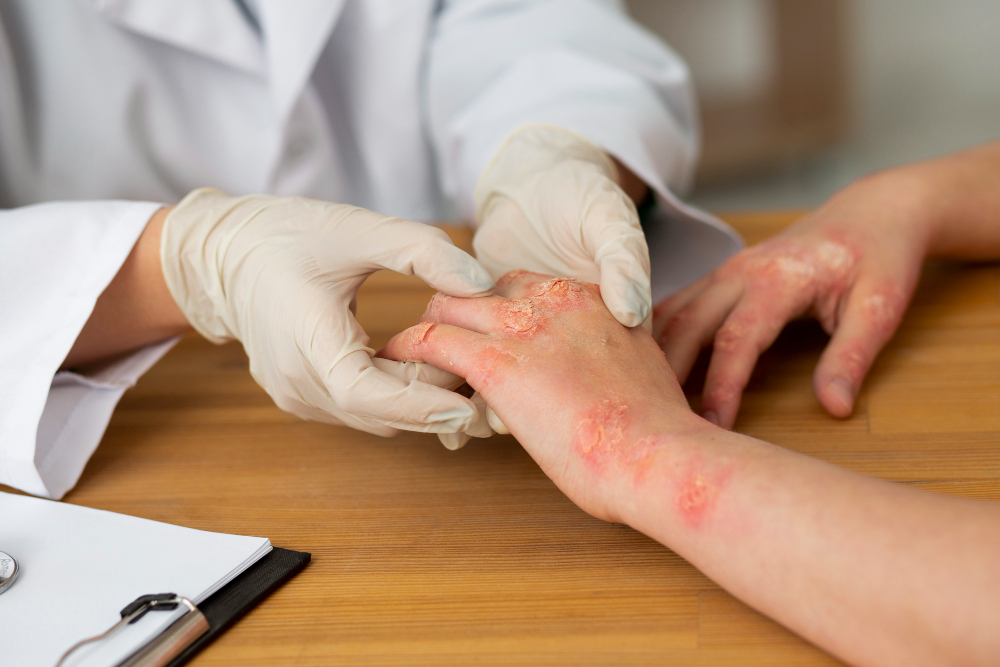
What is Eczema?
Eczema is a common skin condition. It causes dry, itchy, and red patches on the skin. Many people, including children and adults, can get eczema. Although it is not contagious, it can be uncomfortable. Often, eczema comes and goes in cycles. For some, it may last for years. Because of this, understanding eczema causes and triggers is important. With the right care, you can manage symptoms and prevent flare-ups.
Common Triggers of Eczema
Many things can trigger eczema. However, triggers can be different for each person. Knowing your triggers helps with eczema flare-up prevention. Here are some common triggers:
In some locations, dry air or high pollution can also make eczema worse. Therefore, it is helpful to notice what affects your skin most.
Recognizing Eczema Flare-Ups
Eczema flare-ups happen when symptoms get worse. Usually, you may notice:
Sometimes, flare-ups can be mild. Other times, they can be severe. Because flare-ups can be painful, early action is important.
How to Manage Eczema Effectively
Managing eczema takes daily care. But with the right steps, you can reduce symptoms. Here are some ways to manage eczema:
Sometimes, doctors may suggest special creams or ointments. In some cases, they may recommend allergy tests to find triggers. Because everyone’s skin is different, your plan may change over time.
Lifestyle Tips for Eczema Prevention
Simple changes can help prevent eczema flare-ups. For example, you can:
Additionally, always check skin care products for harsh chemicals. Over time, these small steps can make a big difference.
When to See a Dermatologist
Sometimes, eczema needs expert care. You should see a dermatologist if:
Because dermatologists are skin experts, they can help you find the best treatment. Early help can prevent problems and keep your skin healthy.
In summary, eczema can be managed with the right steps. However, each person’s skin is unique. Consult a dermatologist Dr.Srinivas Neelarapu for personalized eczema management advice.